Missing teeth can affect a lot more than your appearance. Over time, gaps in your smile may change how you chew, speak, and even how your jaw feels day to day. Many people start avoiding certain foods, compensating on one side, or feeling self-conscious in photos. The good news is that modern dentistry offers a long-lasting solution that looks natural and functions like real teeth: dental implants.
At D Dentistry, we help patients in Reno replace missing teeth with implant solutions designed to restore confidence, comfort, and bite strength—so you can get back to enjoying the foods you love and smiling without hesitation.
What Are Dental Implants?
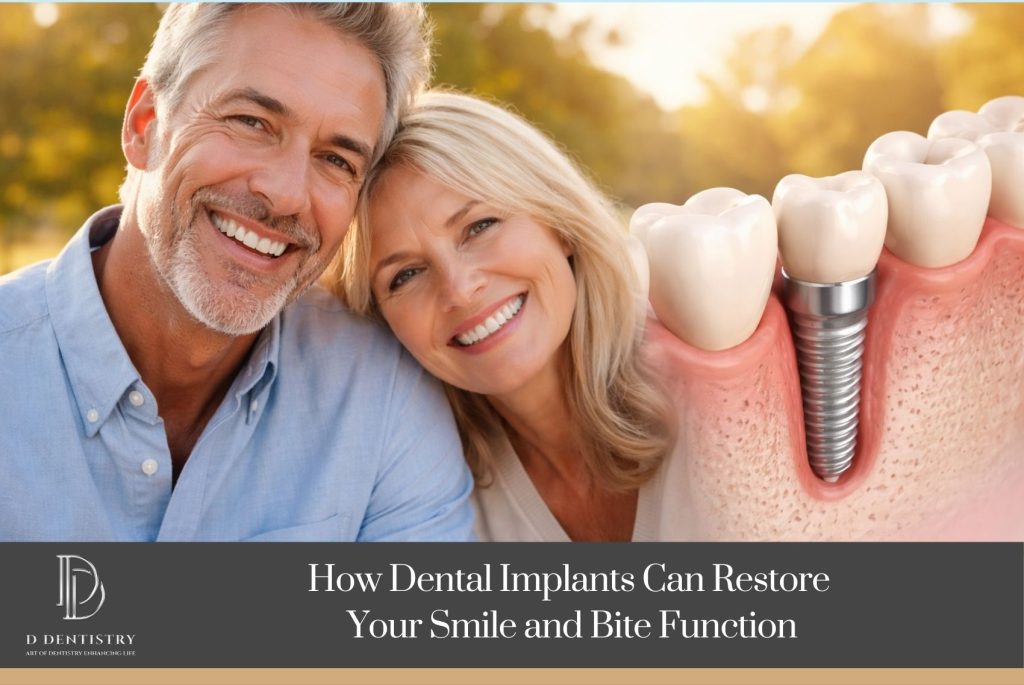
A dental implant is a small post—most commonly made of titanium—that is placed into the jawbone where a tooth is missing. Over time, the implant bonds with the bone in a process called osseointegration, creating a stable foundation. Once healed, an implant can support:
- A single crown (for one missing tooth)
- An implant bridge (for multiple missing teeth in a row)
- Implant-supported dentures (for full-arch restoration)
The result is a replacement that’s designed to look, feel, and function like a natural tooth.
How Missing Teeth Affect Your Bite and Oral Health
When you lose a tooth, the impact isn’t limited to the empty space. Your mouth is a system, and each tooth helps keep that system balanced.
1) Bite Changes and Uneven Chewing
Many people unconsciously shift chewing to the opposite side. This can lead to:
- Jaw fatigue or soreness
- Wear and tear on remaining teeth
- Increased risk of cracks or fractures
- TMJ discomfort in some patients
2) Shifting Teeth and Misalignment
Adjacent teeth can drift into the gap, and opposing teeth can over-erupt (move downward or upward into space). This may cause:
- Crowding
- Bite misalignment
- Food traps that increase cavity/gum disease risk
3) Bone Loss in the Jaw
Tooth roots stimulate the jawbone. Without that stimulation, the bone can begin to shrink over time. Bone loss may contribute to:
- Facial changes (a “sunken” look)
- Less support for dentures
- Reduced options for future tooth replacement if the bone becomes too thin
Dental implants are unique because they help address both function and bone support.
How Dental Implants Restore Bite Strength
One of the biggest reasons implants are so popular is that they’re designed to be stable—not just cosmetically pleasing.
Implants Anchor Into Bone (Like Natural Roots)
Because implants integrate with your jaw, they can restore strong chewing force and reduce the “sliding” or instability that some people experience with removable appliances.
Better Force Distribution
A balanced bite spreads pressure evenly across your mouth. Implants can:
- Improve chewing efficiency
- Reduce strain on neighboring teeth
- Support a more comfortable bite overall
Confidence With Food
Patients often report that implant restorations help them return to:
- Crunchy fruits and vegetables
- Steak and protein-rich foods
- Nuts and other harder textures
…without worry or discomfort.
Smile Restoration: Natural Look, Comfortable Feel
Beyond function, implants also help rebuild a natural-looking smile.
Aesthetic Benefits
Implant crowns are custom-shaped and color-matched to your existing teeth. When done well, the restoration blends in so naturally that most people won’t be able to tell it isn’t a natural tooth.
Speech Benefits
Missing teeth or unstable dentures can sometimes affect pronunciation. Implant-supported teeth can help you speak more confidently because they stay in place.
Facial Support
By supporting jawbone health, implants can also help maintain facial structure over time.
The Dental Implant Process: What to Expect
Every patient is different, but here’s a typical implant journey:
1) Consultation and Planning
Your dentist evaluates your oral health, bite, and bone support. A personalized plan is created based on:
- Number of missing teeth
- Bone density
- Gum health
- Aesthetic goals
2) Implant Placement
The implant post is placed into the jawbone. Healing time varies, but many cases require a few months for full integration.
3) Abutment and Final Restoration
After healing, a connector (abutment) is placed, and the final crown/bridge/denture is attached.
Some patients may need additional steps, such as bone grafting if bone volume is limited, or extractions if a failing tooth must be removed before implant placement.
Who Is a Good Candidate for Dental Implants?
Many adults with missing teeth can be candidates, but a proper evaluation is essential. You may be a good fit if you:
- Have one or more missing teeth
- Want a fixed solution instead of removable dentures
- Have healthy gums (or are willing to treat gum disease first)
- Have adequate jawbone (or are open to grafting if needed)
- Are in generally good health
Even if you’ve been told in the past you don’t have enough bone, newer techniques may still make implants possible. A consultation is the best next step.
Caring for Dental Implants Long-Term
Implants don’t get cavities, but they still require consistent care. Keeping the gums healthy around implants is critical.
Best practices include:
- Brushing twice daily with a soft-bristle toothbrush
- Flossing daily (or using tools like floss threaders/water flossers as recommended)
- Routine dental checkups and professional cleanings
- Avoiding smoking or vaping when possible (it can raise implant complication risk)
- Wearing a nightguard if you clench/grind teeth
With good home care and regular visits, implants are built to be a long-term solution.
Comprehensive Q&A: Dental Implants, Smile Restoration, and Bite Function
Q1: Do dental implants feel like real teeth?
In many cases, yes. Because implants are anchored into bone and restored with custom crowns, they typically feel more natural and stable than removable options.
Q2: How long do dental implants last?
Implants are designed for long-term use. Longevity depends on factors like oral hygiene, gum health, bite forces, and lifestyle habits (like smoking). Many people maintain implants for decades with proper care.
Q3: Are dental implants painful?
Most patients report the process is more comfortable than they expected. Local anesthesia is used during placement, and post-procedure soreness is usually manageable with recommended care.
Q4: How soon can I chew normally after getting an implant?
This depends on healing and your specific case. Some patients receive temporary restorations while healing, but full chewing strength is typically best after integration and final restoration placement.
Q5: What’s the difference between implants and bridges?
A traditional bridge relies on neighboring teeth for support, which may require reshaping healthy teeth. Implants replace the root and support a crown without depending on adjacent teeth.
Q6: Can implants help with dentures that slip?
Yes. Implant-supported dentures can greatly improve stability, reduce movement, and enhance chewing comfort.
Q7: What if I’ve been missing teeth for years?
You may still be a candidate. However, bone loss can occur over time, so you might need additional treatment such as bone grafting. An exam will determine your options.
Q8: Is bone grafting always required?
Not always. Bone grafting is recommended only when there isn’t enough bone volume to support the implant securely.
Q9: Can I get an implant if I have gum disease?
Gum disease needs to be treated and stabilized first. Healthy gums are essential for implant success.
Q10: Are dental implants safe?
Dental implants are a widely used, well-studied tooth replacement option. Like any procedure, there are risks, and your dentist will review your health history and treatment plan in detail.
Q11: Will an implant match the rest of my smile?
Implant crowns are designed to blend with your natural teeth in shape and shade. If you’re also considering whitening or other cosmetic work, your dentist can plan timing for the best match.
Q12: How do I know what type of implant solution I need?
That depends on how many teeth you’re missing, where they are, your bite, and your goals. A consultation is the fastest way to get a clear plan and timeline.
Contact D Dentistry
D Dentistry
500 Damonte Ranch Parkway, Suite 909
Reno, NV 89521
📞 Phone: (775) 683-9336
🌐 Website:https://ddentistryreno.com


