
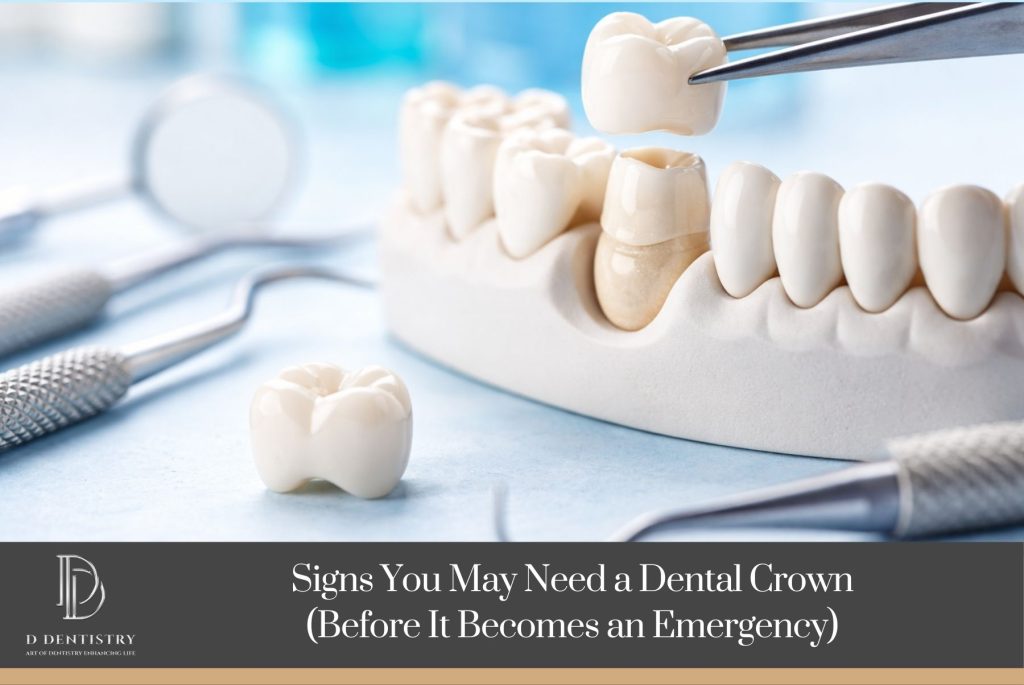
Dental problems rarely happen overnight. Most dental emergencies begin as small warning signs that quietly worsen over time. One of the most common restorative solutions dentists recommend before a situation escalates is a dental crown.
At D Dentistry in Reno, we often see patients who wish they had come in sooner—before pain, infection, or sudden tooth damage disrupted their daily lives. Understanding the early signs that you may need a dental crown can help you protect your tooth, avoid urgent treatment, and maintain a healthy, confident smile.
What Is a Dental Crown?
A dental crown is a custom-made restoration that fits over an existing tooth, restoring its strength, shape, and function. Crowns are designed to protect weakened teeth and prevent further damage while allowing you to chew, speak, and smile comfortably.
Crowns are commonly recommended when a tooth is compromised but still salvageable with the right support.
Early Warning Signs You May Need a Dental Crown
1. Persistent Tooth Sensitivity
If you notice ongoing sensitivity to hot, cold, or sweet foods, it may indicate weakened enamel or internal tooth damage. When sensitivity doesn’t resolve on its own, a crown can act as a protective barrier, preventing further deterioration.
2. Pain When Chewing or Biting
Discomfort while chewing is often a sign that the tooth structure has been compromised. Small cracks or weakened areas may not be visible, but they can worsen quickly without reinforcement from a crown.
3. A Cracked or Chipped Tooth
Even minor cracks can expand over time due to daily biting pressure. A dental crown stabilizes the tooth and prevents the crack from spreading—helping you avoid sudden breakage.
4. Large or Failing Fillings
Teeth with large fillings are more prone to fracture. If a filling begins to loosen, wear down, or cause discomfort, a crown can provide long-term protection and stability.
5. Tooth Discoloration or Darkening
A tooth that appears darker than surrounding teeth may indicate internal damage. Crowns not only protect the tooth but also restore its natural appearance.
6. Weak or Worn Teeth
Teeth that have been worn down over time from grinding or clenching may need crowns to restore proper bite alignment and prevent further wear.
7. Gum Irritation Around a Specific Tooth
Inflammation or tenderness around a single tooth can signal underlying structural issues. Addressing the problem early with a crown may prevent more complex concerns later.
Why Acting Early Matters
Delaying treatment can allow damage to progress silently. Early crown placement can:
- Prevent sudden tooth fractures
- Reduce the risk of infection
- Preserve your natural tooth structure
- Minimize discomfort and stress
- Help avoid urgent dental visits
At D Dentistry, our goal is proactive care—catching problems early so treatment stays straightforward and comfortable.
What to Expect When Getting a Dental Crown
Modern dental crowns are designed with comfort and precision in mind. The process typically includes:
- A thorough examination and imaging
- Custom crown design for optimal fit
- Temporary protection if needed
- Final crown placement and bite adjustment
Our team ensures your crown looks natural and functions seamlessly with your smile.
Frequently Asked Questions About Dental Crowns
How long do dental crowns last?
With proper care, dental crowns can last 10–15 years or longer. Regular checkups and good oral hygiene help extend their lifespan.
Does getting a crown hurt?
The procedure is typically comfortable. Local anesthesia is used, and most patients report minimal discomfort during and after treatment.
Can a crown prevent future dental emergencies?
Yes. Crowns are often placed to prevent worsening damage that could lead to urgent situations if left untreated.
Are dental crowns noticeable?
Modern crowns are crafted to match the color and shape of your natural teeth, making them virtually unnoticeable.
How do I care for a dental crown?
Brush and floss daily, avoid chewing hard objects, and maintain regular dental visits to keep your crown—and surrounding teeth—healthy.
When should I schedule an appointment?
If you notice pain, sensitivity, cracks, or changes in a tooth, it’s best to schedule a consultation as soon as possible to prevent escalation.
Protect Your Smile Before It Becomes Urgent
If something doesn’t feel right with your tooth, it’s worth having it checked. Early intervention can make all the difference.
Contact D Dentistry
D Dentistry
500 Damonte Ranch Parkway, Suite 909
Reno, NV 89521
📞 Phone: (775) 683-9336
🌐 Website: https://ddentistryreno.com


