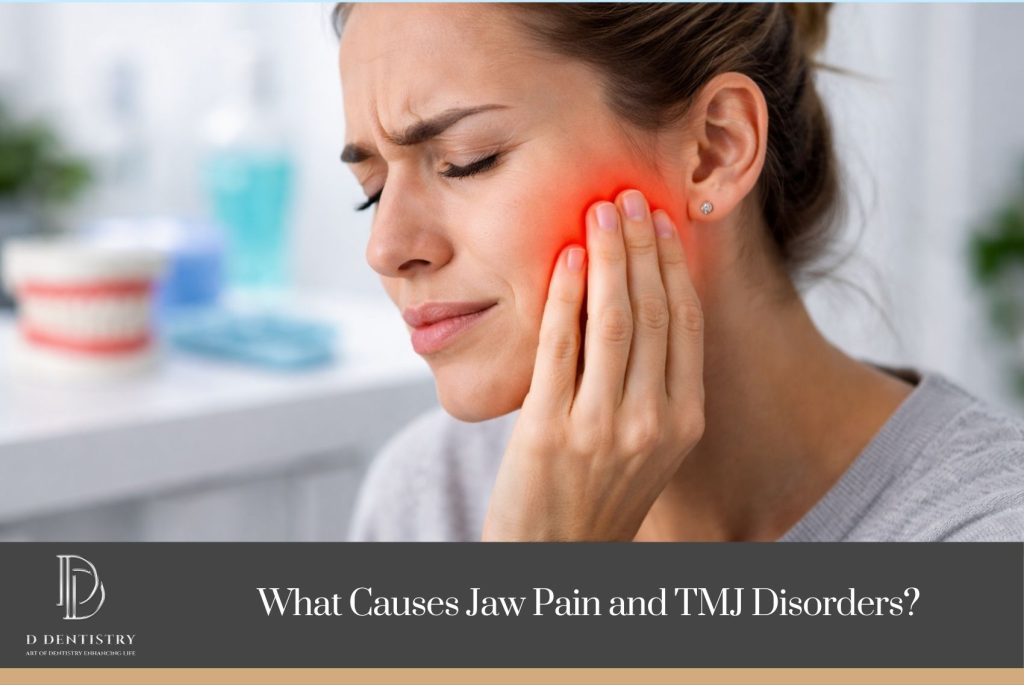
Jaw pain can be more than just a minor inconvenience—it can interfere with eating, speaking, sleeping, and overall quality of life. One of the most common causes of persistent jaw discomfort is temporomandibular joint (TMJ) disorder, often referred to as TMD. At D Dentistry, we regularly help patients in Reno understand the root causes of jaw pain and find effective, long-lasting relief.
Let’s explore what causes jaw pain, how TMJ disorders develop, and when it’s time to seek professional care.
Understanding the Temporomandibular Joint (TMJ)
The temporomandibular joints are the two joints that connect your lower jaw (mandible) to your skull, located just in front of each ear. These joints allow your jaw to move smoothly up and down and side to side—movements essential for talking, chewing, and yawning.
When something disrupts the normal function of these joints or the surrounding muscles, TMJ disorders can develop, leading to pain and dysfunction.
Common Causes of Jaw Pain and TMJ Disorders
Jaw pain rarely has a single cause. Most TMJ disorders result from a combination of factors, including:
1. Teeth Grinding and Clenching (Bruxism)
Chronic grinding or clenching—especially during sleep—puts excessive pressure on the jaw joints and muscles. Over time, this can cause inflammation, muscle fatigue, and joint damage.
2. Stress and Muscle Tension
Stress often leads to unconscious jaw clenching. Prolonged muscle tension can strain the TMJ and contribute to ongoing pain, stiffness, and headaches.
3. Bite Misalignment (Malocclusion)
When the teeth don’t align properly, the jaw must compensate during chewing and speaking. This uneven pressure can stress the TMJ and surrounding muscles.
4. Jaw Injury or Trauma
Accidents, sports injuries, or even dental trauma can damage the jaw joint or surrounding tissues, triggering TMJ symptoms that may appear immediately or develop over time.
5. Arthritis
Osteoarthritis or rheumatoid arthritis can affect the TMJ just like other joints in the body, leading to joint deterioration, pain, and limited movement.
6. Disc Displacement
The TMJ contains a small cushioning disc that helps the joint move smoothly. If this disc shifts out of place, it can cause clicking, popping, locking, or pain when opening and closing the mouth.
Signs and Symptoms of TMJ Disorders
TMJ disorders can present differently from person to person. Common symptoms include:
- Jaw pain or tenderness
- Clicking, popping, or grinding sounds when opening or closing the mouth
- Pain while chewing or speaking
- Facial pain or soreness
- Frequent headaches or migraines
- Ear pain, pressure, or ringing (tinnitus)
- Locking of the jaw (open or closed)
- Limited jaw movement
If you experience any of these symptoms regularly, it’s important to seek evaluation.
How TMJ Disorders Are Diagnosed
At D Dentistry, diagnosing TMJ disorders starts with a comprehensive exam. This may include:
- Reviewing your symptoms and medical history
- Evaluating jaw movement and muscle tenderness
- Examining your bite and tooth wear
- Digital imaging to assess joint structure
Accurate diagnosis allows us to tailor treatment to your specific needs.
TMJ Treatment Options
Treatment depends on the cause and severity of your condition. Common options include:
- Custom night guards or splints to reduce grinding and joint stress
- Bite adjustments to improve alignment
- Muscle relaxation and jaw exercises
- Anti-inflammatory or pain-relief therapies
- Stress management recommendations
- Referrals for advanced care when necessary
Early treatment can prevent symptoms from worsening and reduce the risk of long-term joint damage.
Frequently Asked Questions About Jaw Pain and TMJ Disorders
Q: Can TMJ disorders go away on their own?
A: Mild cases may improve with rest and stress reduction, but chronic or worsening symptoms often require professional treatment to prevent long-term damage.
Q: Is jaw clicking always a sign of TMJ disorder?
A: Not always. Occasional clicking without pain may not be serious, but persistent sounds accompanied by discomfort or locking should be evaluated.
Q: Can TMJ cause ear pain or headaches?
A: Yes. Because the TMJ is close to the ears and shares nerves with the head and neck, TMJ disorders frequently cause earaches, headaches, and facial pain.
Q: How do I know if my jaw pain is dental or TMJ-related?
A: Jaw pain can stem from dental issues, sinus problems, or TMJ disorders. A dental evaluation is the best way to identify the true cause.
Q: Does stress really affect TMJ pain?
A: Absolutely. Stress is a major contributor to clenching and muscle tension, which can significantly worsen TMJ symptoms.
Q: Are night guards effective for TMJ disorders?
A: Custom-fitted night guards are one of the most effective treatments for patients who grind or clench their teeth, helping protect the jaw joints and teeth.
Q: When should I see a dentist for jaw pain?
A: If jaw pain lasts more than a few days, interferes with daily activities, or is accompanied by headaches or jaw locking, it’s time to schedule an appointment.
Get Expert TMJ Care in Reno, NV
Jaw pain doesn’t have to control your life. With the right diagnosis and personalized treatment, relief is possible. At D Dentistry, we are committed to helping patients find comfort, function, and long-term oral health.
Contact D Dentistry
D Dentistry
📍 500 Damonte Ranch Parkway, Suite 909
Reno, NV 89521
📞 Phone: (775) 683-9336
🌐 Website: https://ddentistryreno.com


